MAKE
SOUND
LEAVE A
MARK.
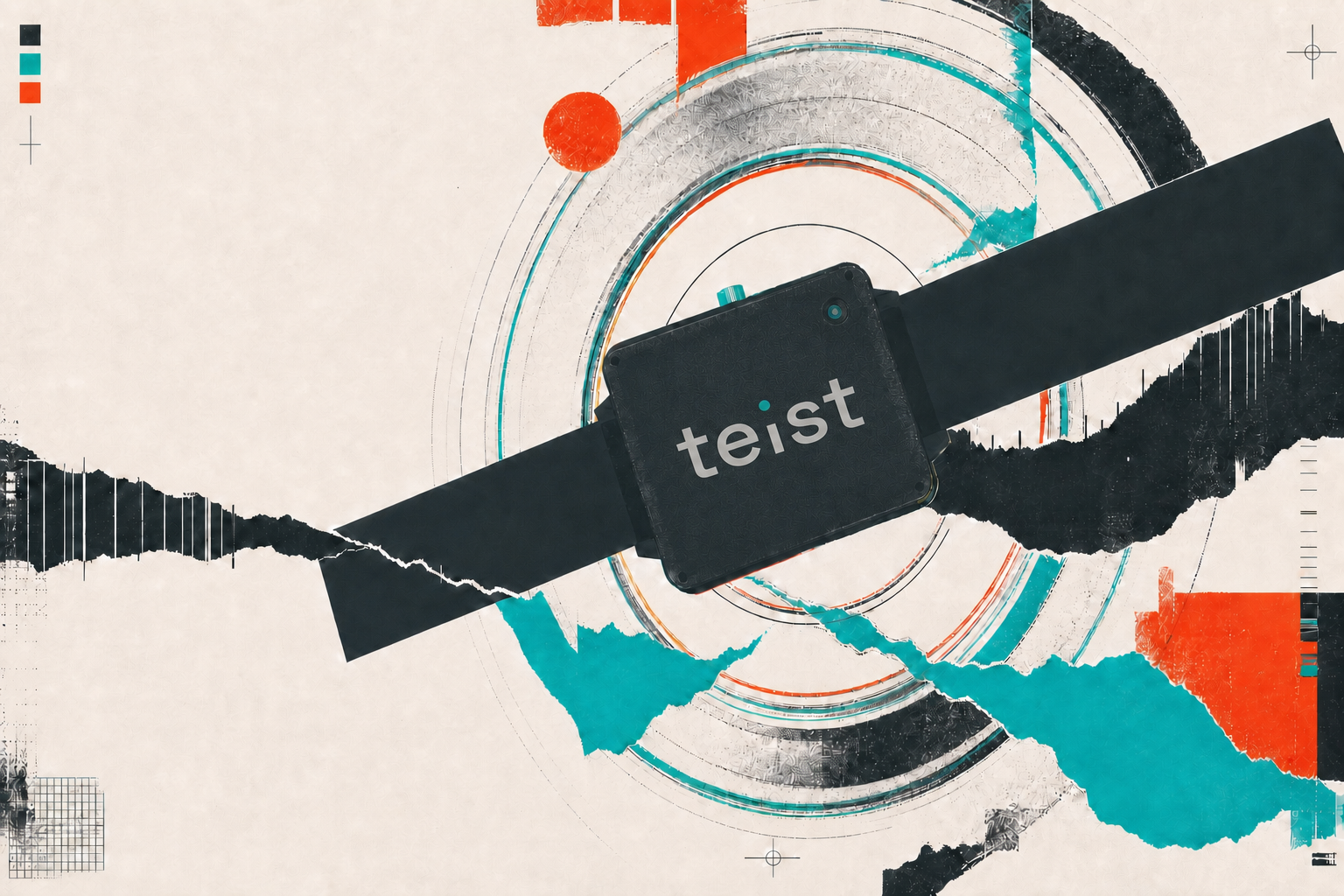
Teist creates signed presence evidence while music is recorded, then binds it to the source take.
See where it starts ↓
Before the bounce, before the upload, there was a person, a room and a take.
Teist records a small set of facts while that take is happening. The result is signed evidence from the source, ready to travel with the music when the artist chooses.
AFTER RELEASEA detector examines the finished file and estimates.
The most useful moment has already passed.
DURING THE TAKETeist records contact, movement and source-bound responses.
The evidence is made while the artist and recording are still together.
The difference is when the evidence is made.
BODY01
Four marks. One source record.
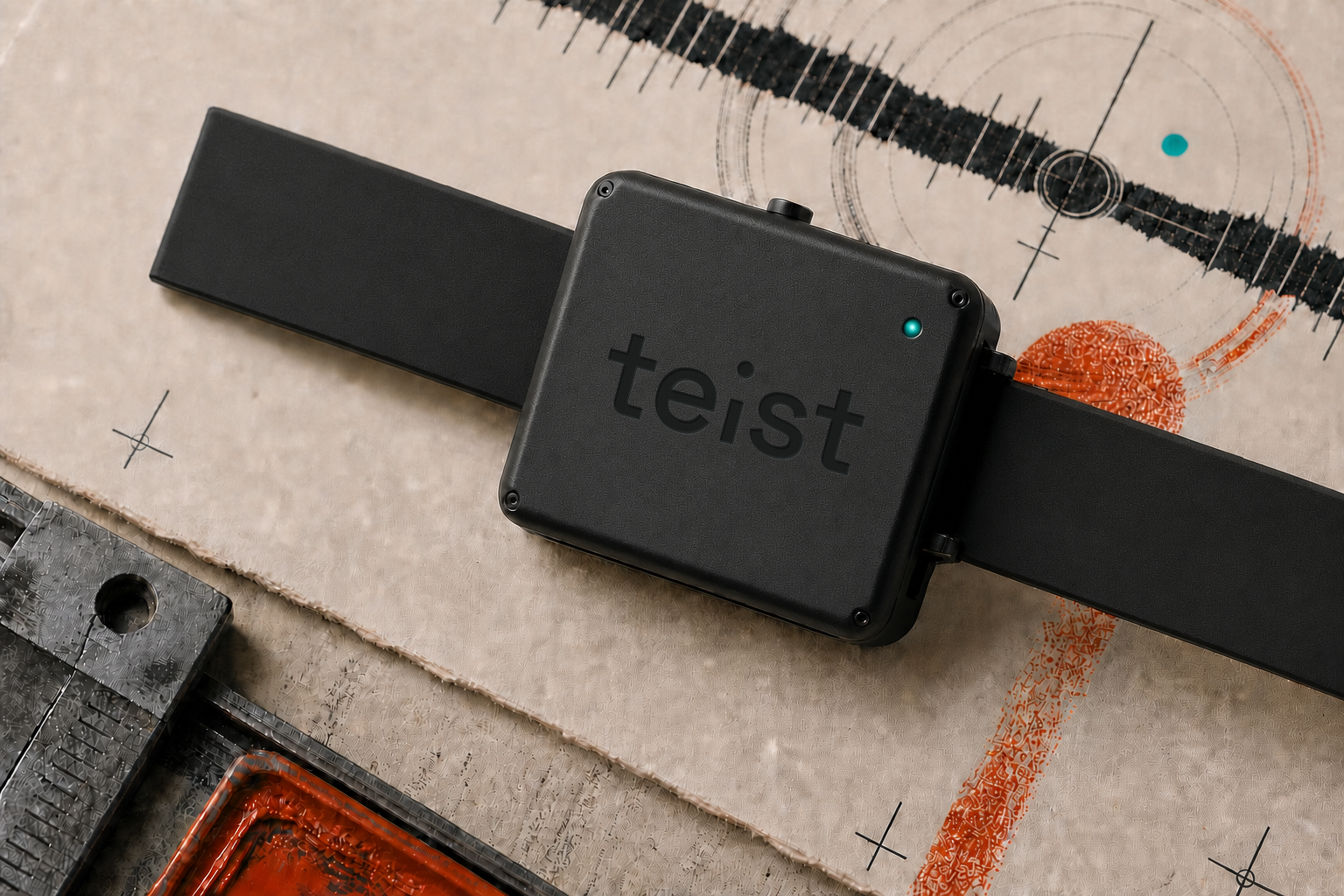
WearThe artist puts on the band before recording starts.
The band enters the room with the artist.
Worn before recording starts, it looks for qualified contact and movement, answers one-time acoustic challenges drawn from the source and signs its responses.
- Contact
- Qualified wear during the session.
- Motion
- Movement while the take is being recorded.
- Challenge
- A one-time acoustic challenge from this take.
- Signature
- A response that can be checked later.
The artist controls whether to share it. The studio keeps the session moving. The release team gets evidence it can inspect.
A source take arrives with a Teist record.
Teist supplies the evidence. The buyer keeps the policy.
ACCEPTLABELESCALATEREFUSE
PUT THE FIRST BANDS IN IRISH ROOMS.
One working session is worth more than another closed demo. Teist is looking for artists and studios willing to put the record under real recording pressure.
Start a pilot conversationTEIST / PILOT SERIES
- Room
- Professional studio or home setup
- Session
- The artist's existing recording workflow
- Review
- Independent evaluation after the take
- Test
- Evidence that can survive outside the demo
BUILT TO LEAVE THE DEMO.
TEIST / OPEN LINE
Tell us what you're making.
If you record music, release it, build for it or have a hard question about proof, we want to hear from you.
CONTACT
Write to hello@teist.live or use the form.
FIELD NOTES
Follow the pilot.
Occasional notes as Teist leaves the bench and enters recording rooms.